Here is the final prelim:
Showing posts with label AS. Show all posts
Showing posts with label AS. Show all posts
Monday, 8 May 2017

Thursday, 16 March 2017
Evaluation Question 7
I was very fortunate that Meg and I get on really well and we
both had a very similar vision for the film: the style, the tone, the look, the
shots. We realised that we were going to have to thoroughly plan everything as
much as we could, and our research and planning we had already done before
working together, and our interest in other specific films really helped us to
construct the look we wanted for the film.
The style and narrative
It was really important to both of us that we made a film
that had a quite complex plot, had a social realist tone, and that it looked
like a real film. We went through extensive planning, looking at specific
examples from our favourite films, particularly those of the social realist and
thriller genre, of location, style, plot, characters, semiotics and colour
palettes that we could emulate in our own work. We looked at casting
meticulously, working with our friends who we knew were reliable, could work
with our schedule and could appear to be the right age (Tom older than Sonia).
We cast our friend Sonia as the protagonist, and though she was different to
our original character profile (as Sonia is black and we had originally planned
to cast someone who was white), but we actually preferred this as we thought it
would be important to portray different social groups and have an interracial
relationship. Looking back through our evaluation questions, Meg and I have
realised how layered the narrative really is and how detailed our purposes for
each shot were. There are multiple different readings that could come from this
opening (which you can read about in evaluation question 2 in greater detail),
and though we know how the rest of the film would have developed through
negotiated readings, it was really interesting to see through feedback from
surveys and friends what they thought really happened, and what would happen
next.


Shotlist
As we thought in such similar ways we were already visualising
the same sort of shots we would use for the opening, and our narrative helped
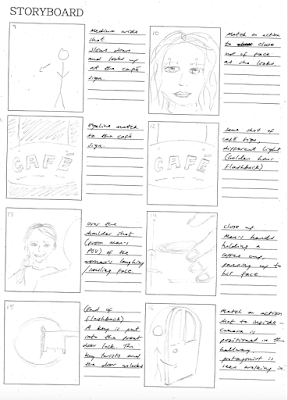
to shape this too: close up match-on-action shots on the phone and the knife;
shot reverse shots in the coffee shop; establishing wide shot across the road
at the bus stop; and low-angle shots looking up to the coffee shops sign, but
at different times of day. Developing
from the preliminary task, we knew the importance of having a groundwork of
shot reverse shots, using the 180 degree rule, and match on action shots, but
to also build upon these basics. Unlike the prelim, we planned an extensive
shot list, and Meg drew up a story board. We also, however, gave ourselves
leeway to work around the locations we were working in, and leeway to experiment
on location with different shots.

Location
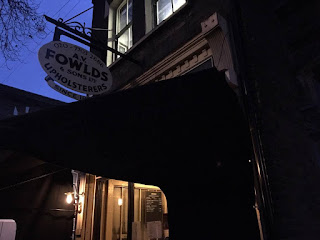
From doing the prelim task we knew the importance of finding
appropriate locations to suit the narrative and the style of the film. We were
very lucky that our friend lived in an area which would work really well for
our film: it could look like a rough and busy area on the main road, but the
side road on which he lived would juxtapose as it is much quieter. It also
worked well as he lived right next door to a coffee shop, which we had to ask
the owner’s permission to film in, and fitted perfectly with the narrative.
Having everything in one place also helped because we didn’t have to shoot in
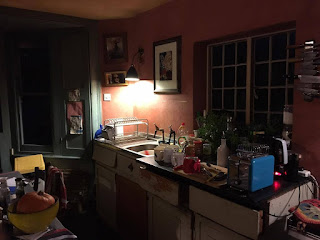
multiple different locations on different sides of London. We also just loved
his house: it had everything we needed there, we didn’t have to bring anything
else with us- it already looked like a film set! At school we also used the
darkroom to film the second flashback as it would mean we got to shoot in a
room with red lighting – an aspect that was very important to us since the
start of the process- and we didn’t have to edit in the red in post-production.


On the day
We planned to film separate scenes on separate days, but
fortunately the filming process didn’t take very long as everything was in such
close proximity. We spent one evening filming all of the shots in the house,
and some shots on the main road. It was a great surprise on the day as by using
a specific lens on my camera, the lights in the background of each shot blurred.
Using this to our full advantage, we experimented with many different shots to
make the best use out of it which created a really beautiful effect, and we
think added a lot to the film. The golden hour flashback was very important to
film at a specific time of day, about 4 o’clock, so we had a very limited
amount of time to get everything we wanted before it got dark (about 5 o’clock
in winter). We were also pressed for time as the coffee shop closed at about
4:45, so we had to work very quickly. On that day we then waited for it to get
dark do we could film extra shots and diegetic sound on the main road that we
didn’t get on the other day of filming. We filmed the second flashback in the
darkroom on a separate day.
Technical development
I have progressed a lot from when we first started the course,
which I think you can clearly see when comparing the prelim to our final film.
In particular I have learnt how to use sound equipment correctly, and how to
edit this successfully along with a soundtrack that reflects the mood of the
film. As you can see in our evaluation question 6, we learnt more about the
benefits and problems with using a Conon 550D and f1.4 lens- the shots were really
beautiful with a very precise point of focus, but the manual focus was very difficult
to use, particularly during walking shots. I think we actually got around this
very well, and managed to edit the most successful shots to create a really
beautiful opening. My editing skills greatly improved, and I think that in
particular through post-production our soundtrack was really strong, and our transitions
between the present and the past were very clear.
Teamwork
Meg and I tried to split the responsibilities evenly with
each other: Meg did most of the filming while I did all of the sound, and we
played to our strengths, so as Meg is really arty she made the storyboard and
complied the shotlist, while I did more work in post-production through
editing, and putting the soundtrack together. We also shared the evaluation
tasks. It was great to work with Meg as we had such similar views and we knew
exactly what we wanted for the film, and she and I cared so much about wanting
to bring all our hard work to fruition. I think the result was really
successful, and it turned out even better than we wanted it to.
Evaluation Question 6
What have you learnt about technologies from the process of constructing this product?
F.L
In this video I have summarised what we have learnt from all of the technologies from the process of constructing our opening. These include:
- Using Final Cut Pro
- Editing sound, constructing a soundtrack using stems and ensuring that it flows well throughout the opening, reflecting the tone of each scene
- Editing colour in our first flashback, making the colour palette more golden to distinguish between the present and the past.
- Using titles from dafont.com, and why we chose them
- Using a tripod, and why we used it certain scenes and not in others
- Using a Canon 550D with an F1.4 lens, the difficulties and benefits of it, and how the way our film was shot reflects other scenes from thrillers.
Evaluation Question 5
M.H.
How did you attract/address your audience?
These are some responses from our target audience. In the video they talk about aspects of the film that they enjoyed, and why they were drawn to them.
How did you attract/address your audience?
Our aims
As a whole:
- Achieve a sense of tension, suspense and mystery in order to entice the audience and make them want to carry on watching the film to find out what is truly happening.
- Using the social realism to build a stronger relationship with the audience as they are able to relate to the content of the film further.
- Use modern aspects of cinema (e.g. inter-racial relationships) to address a young adult audience as it is a realistic representation of today’s society.
Camerawork and editing:
- Using a shallow depth of field (so the protagonist is in focus and the background blurred/out of focus) in order for our cinematography to look aesthetically pleasing, and to help the audience build an intimacy with the protagonist as she is the centre of focus.
- Using a combination of lengthy shots and fast paced editing/quick jump cuts, as the contrast between the two enhances the tension at the end of the opening - the fast pace is juxtaposed with the poignance at the start which emphasises the suspense of the red flashback and the phone call.
- Using a combination of handheld and tripod shots. The handheld shots helps to build intimacy between the audience and the protagonist as it gives the feeling of a personal insight. The tripod shots help to frame the shots and improve the cinematography.
The flashbacks:
- Helps to break the opening up into sections which adds another level of depth to the film and adds further intrigue and complexity.
- This also allows further emotions to be conveyed which will help the audience to connect further with the film.
The use of red and ambiguity:
- The red colouring gives semiotics and colour connotations to the film; red usually signifies danger, blood, death and threat. This will give the audience to an insight to the themes of the film, and also help them to understand what is going on in the scene.
- However, the use of ambiguity prevents the audience from knowing what is fully happening. This helps to entice the audience as they want to carry on watching to find out more.
- Both the red colouring and the ambiguity masks the person in the flashback, which heightens the mystery and suspense. This is good as it keeps the audience guessing.
Music and sound:
- We chose to use an emotive soundtrack rather than using dialogue. We did this for a number of reasons.
- The protagonist appears alone for most of the opening, so dialogue is not necessary.
- We wanted to give the cafe flashback a hazed/distant feel, and the lack of dialogue gives this distance.
- Soundtrack can intensely build an atmosphere and emotion. This helped us convey sentiment and the start of the story in the street scenes even though the protagonist was doing nothing but walking. This keeps the audience engaged and allows them to build ideas in their heads
- Most importantly, we decided to use soundtrack instead of dialogue as it aids to build the mystery and suspense, as the audience are revealed much less about both the story and the characters, and will therefore leave them guessing and wanting to watch more. It also hides what is truly going on as the audience do not have the clarification through the use of dialogue.
- We used ambient sound in order to ground the film and help build the atmosphere.
- We used it for sound bridges and soft background noise - helping to enhance the street scene and to give an immediate feel for the location. This places the audience in the film and helps them to engage.
- Sound matches - helping to blend the memories of the past with the present. These sounds are enhanced and louder than they would normally be, so the audience acknowledges the sounds.
- For a little part of the opening we used no soundtrack at all, which helps to break up the scenes and allows a new atmosphere to begin. This helps the audience notice and understand the change in mood.
These are some responses from our target audience. In the video they talk about aspects of the film that they enjoyed, and why they were drawn to them.
Evaluation Question 4
Who would be your audience for your media product?
F.L.
 We had a screening of our film to an audience of 14 people, 7 men and 7
women, all in the age range of 15-25, and asked them to fill out a questionnaire about our film. Having this audience worked really well as this was our
target audience anyway, so their feedback would likely represent how our
demographic may also feel as a whole.
We had a screening of our film to an audience of 14 people, 7 men and 7
women, all in the age range of 15-25, and asked them to fill out a questionnaire about our film. Having this audience worked really well as this was our
target audience anyway, so their feedback would likely represent how our
demographic may also feel as a whole.


When asking about gender of protagonists, 3 prefer female protagonists,
and the rest don’t mind. It was useful to know that for most people it didn’t matter
either way, but it was also clear to see that people would like to see more
women in lead roles.

It was good that the majority of our audience recognised
that our film is part of the thriller genre, with the opening also developing
some of the tropes of psychological and crime thrillers, and horror movies.

When asking about what the plot of the opening was, most
people understood the dynamic of the relationship between two characters, and
most recognising that the coffee scene and the scene with the knife was in the
past. All of the viewers knew that the man getting coffee with the female
protagonist was the man that she later calls.
We
asked our audience what their favourite part of the opening was to see what
really drew people to our film. 7 people preferred the way the film was shot,
the bus stop scene in particular, with the stylised mood shown through the
lights. 1 person said that the clarity of our shots made our work look very
professional, and not cliché, which our social-realism themes contributed to. 3
people said the flashback scenes were their favourite, as they brought a lot to
the mood of the opening. 1 person thought the casting stood out too. 3 people
liked the sound the most, as it added to the general tone of the opening, with
1 person specifically mentioning how the unanswered call tone at the end was especially
creepy.
For some of our viewers, which some mentioned in the
penultimate question about what they would change, the ending was quite
confusing. When we asked our audience to summarise the plot, some didn’t know who had been killed, or who was the murderer in the
final flashback. However, we still think this is a positive: our aim in the
second flashback in red was to make it ambiguous as to who the killer and the victim
were due to the use of black gloves to conceal identity and focus on the
movement of the knife. By leaving questions unanswered at the end of the
opening we hoped people would want to keep watching the film, which is exactly
what we achieved: 100% of our viewers said they would keep watching the film in
our questionnaire.
Subscribe to:
Comments (Atom)